Less than100 Days Until World Cup 2026: Everything You Need to Know About the Biggest Tournament Ever
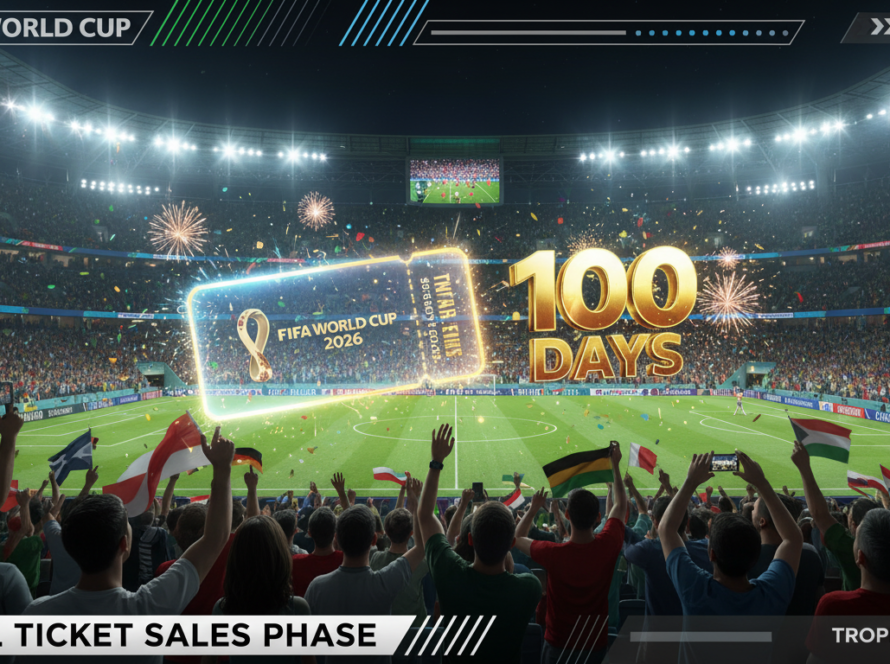
The countdown has officially hit the triple digits. In less than 100 days, the sporting world will pivot its gaze toward North America for the FIFA World Cup 2026™. This isn’t just the return of the world’s most popular tournament; it is a massive expansion that redefines the scale of international sports.
For fans, travelers, and stakeholders, the 100-day mark is the “point of no return.” Logistics are being finalized, rosters are taking shape, and the reality of a 48-team, three-nation tournament is setting in. Whether you are a seasoned traveler or a first-time spectator, navigating the “biggest tournament ever” requires a strategic approach.
This guide serves as your high-authority briefing on the 2026 World Cup, covering everything from the new tournament format and host city clusters to the critical travel logistics you must master before kickoff.
The “United” Vision: Why 2026 is Different
The 2026 edition is the first World Cup to be hosted by three nations: The United States, Canada, and Mexico. While the 1994 World Cup (also in the U.S.) still holds the record for the highest average attendance, 2026 is poised to shatter every existing metric for total viewership and ticket sales.
The 48-Team Expansion
For the first time since 1998, the field has expanded from 32 to 48 teams. This change introduces a new stage in the knockout bracket—the Round of 32—increasing the total number of matches from 64 to 104.
What this means for fans:
- More Matches: A longer tournament (39 days total).
- New Contenders: More opportunities for “Cinderella stories” from emerging football nations.
- Logistical Strain: More fans moving between 16 host cities simultaneously.
Comparison: The Traditional vs. The Expanded World Cup
To understand the sheer scale, look at how 2026 compares to the previous tournament in Qatar.
| Feature | Qatar 2022 | North America 2026 |
| Total Teams | 32 | 48 |
| Total Matches | 64 | 104 |
| Host Cities | 5 (within one city-state) | 16 (across a continent) |
| Time Zones | 1 (UTC+3) | 4 (Pacific to Eastern) |
| Tournament Duration | 29 Days | 39 Days |
| Primary Transit | Metro/Bus | Air/Long-haul Rail |
100-Day Logistics: The Host City Clusters
To minimize the “Travel Load” for players and fans, FIFA has divided the 16 host cities into three geographic regions. As we detailed in our [Host City Guide for the 16 Venues], your travel strategy should focus on staying within one of these clusters during the group stages.
1. The East Region (The Atlantic Corridor)
- Cities: Toronto, Boston, New York/New Jersey, Philadelphia, Miami.
- Primary Timezone: UTC-5.
- Key Advantage: Shortest distances between host cities. The “Northeast Corridor” (Boston to Philly) is the only region where Amtrak rail is a viable alternative to flying.
2. The Central Region (The Heartland & Mexico)
- Cities: Kansas City, Dallas, Houston, Atlanta, Monterrey, Mexico City.
- Key Challenge: High heat and humidity in the U.S. South and significant altitude in Mexico City.
- Anchor: Mexico City’s Estadio Azteca will host the opening match, cementing its status as the “Cathedral of Football.”
3. The West Region (The Pacific Coast)
- Cities: Vancouver, Seattle, San Francisco Bay Area, Los Angeles, Guadalajara.
- Key Challenge: The largest travel distances. A flight from Guadalajara to Vancouver is nearly 6 hours, crossing multiple borders.
Player Readiness: Monitoring the “UCL Hangover”
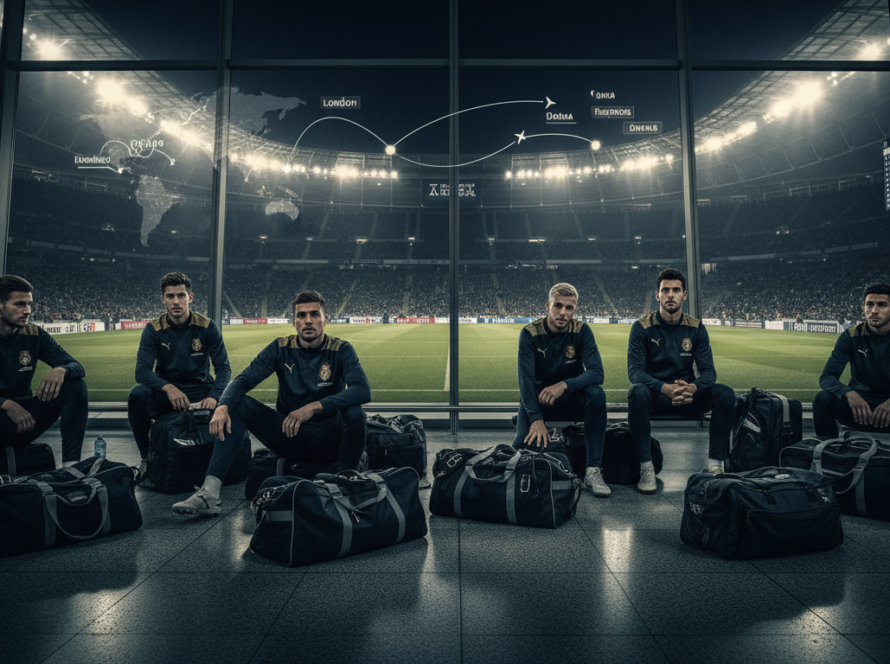
With less than 100 days to go, the physical state of the world’s best players is a major concern for national team managers. Most elite European stars are currently in the thick of the UEFA Champions League knockout rounds.
As analyzed in our report on [The UCL Hangover], the cumulative fatigue from the European season, combined with the 3,000-mile travel leaps required in 2026, creates a high risk for soft-tissue injuries.
Watch for: Managers rotating squads early in the tournament to preserve their “UCL stars” for the newly added Round of 32.
My Practical Implementation: Here is My 100-Day Checklist
If you plan on attending like me, these are the four pillars of preparation, address these now.
1. The “FIFA Pass” & Visa Verification
Do not assume your current visa status covers all three countries.
- Cross-Border Travel: Ensure you have the correct Electronic System for Travel Authorization (ESTA) for the U.S., the eTA for Canada, and the necessary permits for Mexico.
- Expedited Processing: Check if your country is eligible for the “FIFA PASS” program designed to speed up sports-related visa interviews.
2. Accommodation Strategy
Hotel prices in host cities like New York and Los Angeles are already surging.
- The 30-Mile Rule: Look for accommodations 30–40 miles outside the city center near major transit hubs (e.g., stay in Stamford, CT for NY matches or Alexandria, VA for DC-area fan fests).
- Refundable Bookings: Given the knockout nature of the tournament, only book non-refundable rooms once your team’s path is confirmed.
3. Ticketing Reality
Official tickets are sold exclusively through FIFA.com/tickets.
- Last-Minute Phase: With 100 days left, the “Last Minute Sales Phase” is typically the final chance to get face-value tickets before the high-risk secondary market takes over.
- Avoid Scams: FIFA uses digital-only ticketing. Any “paper ticket” offered on the street is a confirmed fraud.
4. Connectivity & Tech
- eSIMs: Purchase a North American regional eSIM that covers the USA, Canada, and Mexico to avoid massive roaming fees.
- UTC-5 Sync: Set your primary digital calendar to UTC-5 (Eastern Time). This is the tournament’s “master clock” for broadcast and logistical windows.
Avoid these Mistakes:
- Underestimating Traffic: A “20-minute drive” in Los Angeles or Mexico City can take 2 hours on match day. Always use public transit or dedicated FIFA shuttles.
- Booking “Same-Day” Cross-Border Flights: Border security and customs will be congested. If you have a match in Toronto on Tuesday and NYC on Thursday, travel on Wednesday morning.
- Neglecting the Heat: July in Atlanta or Houston is unforgiving. Heatstroke is a real risk for fans standing in long security lines. Stay hydrated and use the “cooling zones” provided at stadiums.
Expert Fan Tips for 2026
- The “Hub and Spoke” Model: Choose one “Hub” city (like Atlanta or Dallas) with a major international airport and fly to matches from there, rather than moving all your luggage every 3 days.
- Follow the “Freshness” Metric: When betting or predicting results, look for teams whose core players were not involved in the UCL semi-finals. They will likely have the “legs” to outrun tired giants in the final 20 minutes.
- Fan Fests are the Real Experience: If you can’t get a ticket to the stadium, the FIFA Fan Festivals™ in downtown parks offer the most electric atmosphere and are usually free to enter.
FAQ: Everything You Need to Know
1. When does the 2026 World Cup officially start?
The opening match is scheduled for mid-June 2026 at the Estadio Azteca in Mexico City. The final will take place on July 19, 2026, at MetLife Stadium in East Rutherford, New Jersey.
2. How many games will each team play?
Even with the expansion, the maximum number of games a finalist will play is eight (up from seven in previous tournaments).
3. Is there a “Global Ticket” for all matches?
No. Tickets are sold on a per-match or per-stadium-package basis. There is no single ticket that grants access to all 104 matches.
4. Will there be VAR and semi-automated offside technology?
Yes. FIFA will utilize the latest iterations of VAR (Video Assistant Referee) and SAOT (Semi-Automated Offside Technology) to ensure factual integrity.
5. Are the stadiums grass or turf?
Per FIFA requirements, all 16 venues—including those that usually use artificial turf—must install high-quality, natural grass pitches for the duration of the tournament.
6. Can I use the same currency in all three countries?
You will basically need U.S. Dollars (USD), Canadian Dollars (CAD), and Mexican Pesos (MXN). However, most venues are 100% cashless and accept major credit cards and mobile payments.
Conclusion: The 100-Day Sprint
The next 100 days will pass faster than a counter-attack. The 2026 World Cup is a celebration of North American diversity and the global game, but its scale rewards the prepared. By understanding the UTC-5 scheduling, respecting the UCL Hangover effect on players, and securing your FIFA Pass logistics now, you ensure that your experience is defined by the goals on the pitch, not the stress of the journey.
Key Takeaways Summary
- Scale: 48 teams, 104 matches, 3 countries.
- Logistics: Stick to geographic clusters (East, Central, West).
- Timing: Use the 100-day mark to finalize visas and regional eSIMs.
- Performance: Watch for fatigue in European stars; underdogs will have a physical edge.