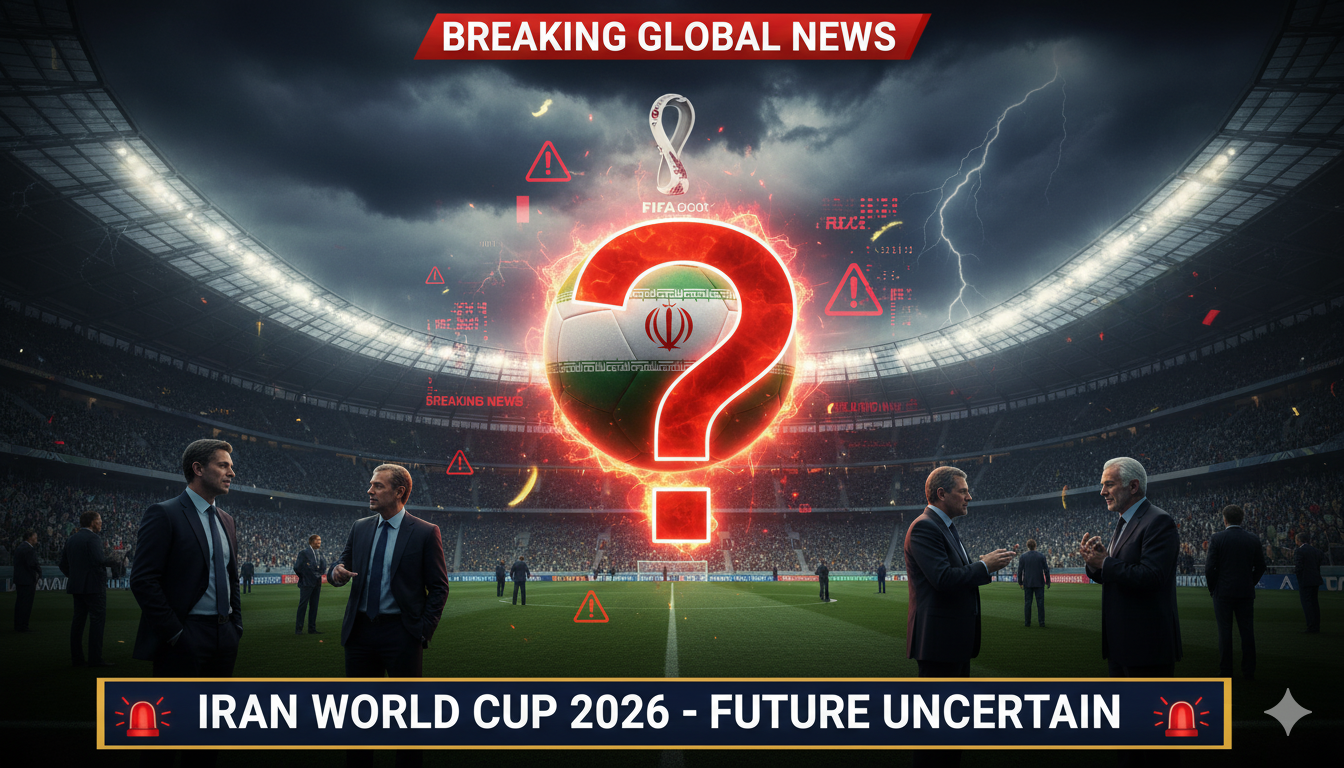
My Hopes and long awaited excitement begins to fade off with the 2026 FIFA World Cup in North America less than three months away, the tournament schedule has been thrown into chaos. A rapidly escalating geopolitical crisis has sparked unprecedented withdrawal rumors that is difficult to see it happen, threatening to upend the 48-team competition.
The central question dominating global sports media is clear: Will Iran play in the 2026 World Cup?
Following the outbreak of the U.S.-Israeli conflict with Iran on February 28, 2026, Iranian officials have openly stated that participation in the U.S.-hosted games is impossible. Simultaneously, controversial U.S. foreign policy regarding Greenland has triggered rumblings of a boycott from major European football associations.
My mind can’t wait as I need to breaks down the facts behind the rumors, the official statements from FIFA and political leaders, and the regulatory consequences if a nation withdraws at the final hour.
The Core Crisis: Why Iran is Threatening to Withdraw
Iran’s national football team, which qualified for its fourth consecutive World Cup, was drawn into Group G alongside Belgium, Egypt, and New Zealand. All three of their group-stage matches are scheduled to be played in the United States (Los Angeles and Seattle).
However, the geopolitical landscape shifted dramatically in late February 2026. The United States and Israel launched extensive military strikes against Iran, which resulted in the death of Iran’s Supreme Leader, Ayatollah Ali Khamenei. In the aftermath, Iran’s participation in a tournament co-hosted by a nation it is actively in conflict with became highly unlikely.
Minister Ahmad Donyamali’s Statement
On March 11, 2026, Iran’s Sports Minister Ahmad Donyamali addressed the issue directly on state television.
“Considering that this corrupt regime has assassinated our leader, under no circumstances can we participate in the World Cup,” Donyamali stated. He further emphasized that the safety of Iranian players could not be guaranteed and that the conditions for participation simply “do not exist”.
While this is a strong verbal commitment to pulling out of the tournament, FIFA has not yet received an official, legally binding withdrawal notice from the Iranian Football Federation.
FIFA’s Current Response: Monitoring but Not Deciding
FIFA’s official response has been cautious, emphasizing continued monitoring rather than immediate action. FIFA has not commented on Iran’s potential withdrawal from the World Cup, nor has there been confirmation from the Football Federation Islamic Republic of Iran. It is also unclear if the federation has begun a formal process to back out of participation at this summer’s tournament.
The Trump-Infantino Meeting
Despite the crisis, FIFA President Gianni Infantino met with President Trump to discuss the situation. According to FIFA’s statement, “We also spoke about the current situation in Iran, and the fact that the Iranian team has qualified to participate in the FIFA World Cup 2026. During the discussions, President Trump reiterated that the Iranian team is, of course, welcome to compete in the tournament in the United States”.
However, Trump’s public position appears more ambiguous. On Thursday, though, Trump discouraged Iran’s national team from traveling to the U.S. for the World Cup, his most recent comments coming a week after he told Politico that he “really does not care” if Iran play at the World Cup.
FIFA’s Wait-and-See Approach
FIFA’s initial response was that it would “monitor” the situation, and sources told ESPN that there was confidence that the situation would resolve itself ahead of the World Cup, which begins when Mexico face South Africa in Mexico City on June 11. Sources have said that FIFA continues to monitor the situation, but that no decision on Iran needs to be taken at this stage.
The European Boycott Rumors: The Greenland Dispute
Iran’s potential exit is not the only threat to the 2026 World Cup schedule. A separate diplomatic crisis is brewing in Europe that could impact the tournament’s broader commercial viability.
The Trump administration recently reiterated its desire to acquire Greenland, an autonomous territory of Denmark. When European allies pushed back, the U.S. threatened 25% tariffs on goods from eight European nations, including the UK, Germany, France, and the Netherlands.
This has led to immediate blowback in the sports world:
- Germany: Jürgen Hardt, a senior politician in the Christian Democratic Union (CDU), publicly suggested that a World Cup boycott should be considered as a “last resort” leverage against the U.S. annexation threats.
- The Netherlands: A public petition demanding the Dutch national team boycott the games surpassed 90,000 signatures.
- UEFA Meetings: Roughly 20 European football association heads held informal crisis talks in Budapest to discuss a unified response.
Despite the pressure, actual European withdrawals remain unlikely. France’s Sports Minister Marina Ferrari recently stated there is “no desire” from her ministry for a boycott, emphasizing the importance of keeping sports separate from politics.
What Happens if Iran Officially Withdraws? (FIFA Rules)
If Iran follows through on Minister Donyamali’s statements, FIFA faces a logistical nightmare. Under Article 6.7 of FIFA’s World Cup regulations, the governing body handles withdrawals strictly.
Here is what happens if a team withdraws this close to the tournament:
- Financial Penalties: Withdrawing before the tournament incurs a mandatory fine ranging from €275,000 to €555,000, depending on the exact date the official notice is submitted.
- Disciplinary Action: The case is immediately referred to FIFA’s Disciplinary Committee. Sanctions can include banning the nation from future international tournaments (such as the 2030 World Cup) and forcing the federation to return any preparation funds.
- Finding a Replacement: Because Iran qualified via the Asian Football Confederation (AFC), FIFA would likely look to the AFC for a replacement team. However, integrating a new team just three months before kickoff poses immense challenges for ticketing, travel, and security preparations.
Mistakes to Avoid for Fans and Ticket Holders
If you hold tickets to Group G matches in Los Angeles or Seattle, or are planning travel around the tournament, avoid these common mistakes during this crisis:
- Panic Selling Tickets: Do not immediately sell your tickets on secondary markets at a loss. If a match is canceled or a replacement team is slotted in, FIFA’s official ticketing portal will issue specific guidance on refunds or valid ticket transfers.
- Ignoring Visa Updates: The U.S. administration frequently updates travel and visa restrictions. Fans from affected regions must monitor the U.S. State Department website daily, as standard tourist visas may be suspended without prior notice.
- Relying on Unofficial News: Social media is currently flooded with fake match schedules. Only trust official communications from FIFA.com regarding team replacements or schedule shifts.
Expert Tips: Navigating the 2026 Tournament
Sports governance experts note that this is the most politically volatile World Cup in modern history.
- Book Flexible Travel: Ensure all flights and hotel bookings for Los Angeles, Seattle, and East Coast host cities have free cancellation policies. Geopolitical protests could force sudden venue changes.
- Monitor UEFA Announcements: While a full European boycott is unlikely, targeted political protests by European teams (such as refusing to participate in certain pre-game ceremonies) are highly probable.
- Understand the Precedent: No country has withdrawn from the World Cup after qualifying since France and India pulled out of the 1950 tournament in Brazil due to travel costs. Iran’s withdrawal would be historic and will likely disrupt the entire Group G point structure.
FAQ Section
Will Iran officially withdraw from the 2026 World Cup?
While Iran’s Sports Minister Ahmad Donyamali stated that the country “under no circumstances can participate” due to the ongoing conflict and the death of their Supreme Leader, FIFA has not yet confirmed an official, legally binding withdrawal from the Iranian Football Federation.
Who will replace Iran if they pull out of the World Cup?
If Iran withdraws, Article 6.7 of FIFA’s regulations gives the governing body sole discretion to replace them. FIFA would likely select the next highest-ranking team from the Asian Football Confederation (AFC) qualifiers, though the tight three-month timeline makes logistics difficult.
Why are European countries threatening to boycott the 2026 World Cup?
Calls for a boycott in countries like Germany and the Netherlands stem from the U.S. administration’s aggressive push to annex Greenland and subsequent threats to impose 25% tariffs on European nations that oppose the move.
What is President Trump’s official position on Iran’s World Cup participation?
Trump has sent mixed signals. On March 12, Trump said on social media that while Iran is not being banished from the World Cup, he does not believe it is “appropriate” for them to take part. “The Iran National Soccer Team is welcome to The World Cup,” Trump wrote on Truth Social, “but I really don’t believe it is appropriate that they be there, for their own life and safety”.
Has a team ever withdrawn from the World Cup before?
Yes, but it is incredibly rare in the modern era. The last time teams withdrew after the draw was in 1950, when Scotland, Turkey, and India pulled out primarily due to the travel costs associated with playing in Brazil.
Key Takeaways Summary
- Iran’s Status: The Iranian Sports Minister has verbally ruled out participation following U.S.-Israeli strikes in February 2026, citing the death of their Supreme Leader and unsafe conditions.
- FIFA’s Dilemma: An official withdrawal will trigger massive fines for Iran and force FIFA to scramble for a replacement team in Group G just 90 days before kickoff.
- European Tensions: Disagreements over U.S. foreign policy regarding Greenland have sparked boycott discussions among European football associations, though official withdrawals remain unlikely.
- Ticketing Impact: The uncertainty deeply affects matches scheduled for Los Angeles and Seattle, urging fans to maintain flexible travel plans.
The intersection of global conflict and international sports has never been more pronounced. As June 11 approaches, FIFA must navigate a diplomatic minefield to ensure the 2026 World Cup can proceed safely and legitimately.
The coming weeks will be crucial as FIFA balances diplomatic pressure, regulatory requirements, and sporting fairness in making decisions that will impact not just the 2026 tournament, but the future of international football governance in an increasingly complex geopolitical landscape.